Soulcial Media Evolution Live Stream

Watch live streaming video from soulcialevolution at livestream.com

Wednesday, June 27, 2012

Success Is Motion - Putting Motion Back Into Success | 4 Things You Shouldn't Do To Have More Time #SoulcialMe

4 Things You Shouldn't Do To Have More Time

4 Things You Shouldn’t Do To Have More Time.

One of the biggest complaints that I see on a daily basis is, “I don’t have time to do this or that.”  Here’s the problem with most of these claims.  Fact is, most people do have the time to do these things.  Fact is, that if you don’t have time to do essential things like: spend time with family, cook dinner, workout, then you’re probably doing to much of something else.

Don’t try to Multitask – This is something that a lot of people don’t seem to get.  Why businesses put an emphasis on this, I have no idea.  You’d think those educated people would have more sense, but I guess not.  Truth is, Multitasking doesn’t work. In fact, when you try to multitask, you’re actually cutting down on your Quality Production.

Trust me, I know from experience.  If you’re trying to write a blog post for example and you’ve got Facebook open, you’re going to get distracted.  Now all of a sudden that 10 minute blog post, turned into a 30 minute blog post.  Then by the end of the day, you don’t feel like you’ve got much done.  Focus on one thing at a time.

Don’t Sit for Too Long – Instead of spending hours away reading that Novel or watching TV, try cutting back on your hours.  Limit TV and Novel reading for one hour.  At least for a little while. Do this for a week and you’ll be surprised how much more time you have.

Don’t forget to Cook when you can – Here is another issue that people claim they don’t have time for.  Cooking.  If you have time to cook three nights a week, then try cooking extra.  It doesn’t take that much longer to cook an extra meal or two.  Throw in an extra box of Spaghetti, an extra scoop of rice and two cans of beans, an extra box of Macaroni, or even cook a few extra Eggs and put them in a plastic container for Breakfast. Don’t forget the sausage.

It’s a lot easier than people think to cook real food.  On top of that, you save a trip to McDonald’s or Burger King, which is bad for your health anyway.  You’re even more than likely saving some extra cash by buying in bulk so you can cook those extra meals.  Nothing says you can’t have variety and extra at the same time.  Mix it up.

Don’t wait until the last Minute – This should be a common sense thing, but it has to be said.  Far to often, people will 10 – 15 things to do and wait until the end of the day to go to the Bank.  Knowing that most Banks close at 4pm? Does that make sense?  I mean, shouldn’t you do the Banking business first?  That way while you’re at the Bank, you can make sure you have the required funds for shopping?  People need to prioritize their list.  Do the time sensitive things first. Pay the Bills, go to the Bank, make that Delivery.  Then do your shopping and running around that you need.

There you have it, 4 Things You Shouldn’t Do To Have More Time.  I’m sure you can probably come up with some other things, let me know in the comments below.  Now, if you’ll excuse me, I’ve spent too long writing and editing this post.  I’m off to do something for an hour.  It’s time to be more productive and have more time for other things.

I am guilty of doing these things. I also have a tendency to procrastinate when I don't understand or something tends to be too hard. I am working on it; I recognize my weaknesses and will be adamantly working on them.

How to Use Social Media to leverage your conference | Conference Wag #SoulcialMe

For event directors, the advent of social media has leveled the playing field. Effective distribution and promotion are no longer just for those who can afford expensive media buys. Social networks allow event attendees to become virtual promoters.

Even better, social platforms like Facebook, Twitter, and LinkedIn are virtually free! Simply put, social media is great news for event holders.

It’s helpful to remember that events are inherently social. It’s natural for people to tell their friends about events they love: Social media hardly invented word-of-mouth. What it does offer is game-changing acceleration, plus metrics for what’s working. 

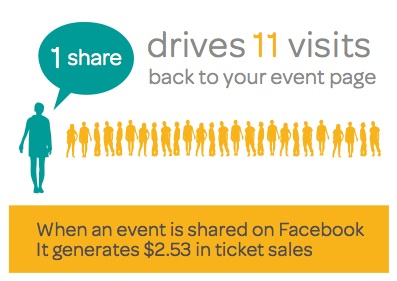
So just how much are those event shares on Facebook and Twitter worth? In October 2010, Eventbrite released a Social Commerce report that put a dollar value on shares for the first time. We discovered that on average, the Dollars Per Share (DPS) of an event on Facebook is $2.53. This means that a share on Facebook generates $2.53 in ticket sales and, in addition, 11 visits back to the event page.


In the festival space, the news was even better. Eventbrite found that when an attendee shares, for example, a Wine/Food/Beer event on Facebook, it generates more than $5.50 in ticket sales.

Looking at additional social networks, Eventbrite discovered that a share on Twitter equals $0.43, a share on LinkedIn equals $0.90, and a share through our ”email friends” application equals $2.34.

Getting Started with Social Media

According to Alexa.com, five of the top 10 most visited sites in the United States are social networking sites. These sites have caused a sea shift in the way people purchase. And when used correctly, they’ll have a direct impact on the success of your event.

However, these sites don’t do all the work themselves. Just opening a Twitter account for your event isn’t going to get it done. It’s critical that you first understand them and decide how to deploy them.

So, what are your basic objectives? Before deciding how to use social media, you first must determine what your goals are. For example, you can leverage social media to achieve any or all of the following objectives:

• Sell out your event

• Increase awareness for your event and brand

• Gain sponsors and donors

• Establish yourself as an expert in your specific field

Check out Web sites like quantcast.com. Here you can search any Web site and discover demographic information about the traffic they receive, such as age, geographic location, income and interests. This information should be in mind before you make any marketing decision. It will help you understand where your future attendees spend time online and how to deliver correct messages to them.


This is part 1 of 3 in our Event Organizers: Social Media series. Tune back into Conference Hound next Monday for Part 2: How to Use Effectively Use Facebook and Twitter to Promote Your Event. 

Tuesday, June 19, 2012

Top MBA Programs Embrace Social Media But Aren't Tracking Applications Resulting From It According to New Study by University of Massachusetts Dartmouth #SoulcialMe

While only 16% use Mobile Apps, they are rated one of the most effective tools second only to Facebook

San Jose, CA/Dartmouth, MA (PRWEB) June 19, 2012

Top MBA programs are using Facebook, Twitter, LinkedIn, YouTube and more in their quest to recruit the best students possible. Only 1 in 3 however, are using tracking methods that tell them how many applicants result from early contact with the program's social media efforts. This was among the key findings of the latest study conducted by Dr. Nora Ganim Barnes, Ph.D., Senior Fellow & Co-Research Chair of the Society for New Communications Research and Director of the Center for Marketing Research at University of Massachusetts Dartmouth and co-author Stephanie L. Jacobsen.

The new report is the outcome of a statistically valid study of the 2012 US News Top MBA Programs. The study examined these programs to quantify their adoption of social media tools and technologies. It also looked at what they considered to be effective and how their investment in social media would look in the next year.

Key Highlights:

  • All 70 schools studied are currently using at least one social media platform or tool to market their MBA program. The top three tools used by MBA programs are Facebook (100%), Twitter (96%) and LinkedIn (87%), used primarily for alumni relations. Three quarters of the schools maintain an MBA blog. Some programs reported using Flickr (30%), Google (16%), mobile apps (14%), and Foursquare (13%).

  • While only 16% of schools are using downloadable mobile app's, these are rated among the most effective tools studied.
  • 65% of schools using social media to market their MBA programs do not track the number of perspective students using social media who in turn complete applications.
  • 41% of these top MBA programs describe social media as playing a critical or major role in their MBA marketing efforts. 42% have no written policy governing the use of social media for their program and 29% do not use any monitoring tool to track buzz or conversations about their program.
  • Most MBA programs studied plan to increase their investment in social media in the next year (82%) and every school agrees that social media is worth the investment they make in it. Less than half of the schools, however (44%), feel social media cuts the cost of traditional advertising or marketing for their programs.
  • 94% report recruitment is the number one goal of their social media efforts, yet the top 4 measures of effectiveness do not include tracking prospective applicants.
  • "It is interesting that the #1 goal for using social media in top MBA programs is recruitment, but the most popular measures of effectiveness are friends/followers, hits and comments rather than resultant applications," stated Barnes.

    Jacobsen added, "While fans, followers and hits are among the most common measures used to assess effectiveness of social media programs, these measurements will not accurately calculate how many prospective applicants apply to a school prior to using their social media. Other tools such as a "how did you hear about us" on the application, as well as software packages allow schools to measure if social media is actually improving recruitment efforts."

    A full copy of the new research report as well as an infographic summary can be downloaded at: www.umassd.edu/cmr/studiesresearch/

    Additionally, Barnes and Jacobsen will publish a paper based on the findings in an upcoming issue of the Society for New Communications Research's Journal of New Communications Research.

    About the Center for Marketing Research at the University of Massachusetts Dartmouth

    To facilitate the economic development of the region by providing an affordable, high-quality economic alternative to meeting business needs for research, training, and consulting in any and all aspects of Marketing. The Center for Marketing Research is associated with and maintains a close relationship with the Chambers of Commerce within southeastern Massachusetts. This unique relationship provides the Center with an effective business networking capability. For more information, visit www.umassd.edu/cmr/.

    About the Society for New Communications Research (SNCR)

    The Society for New Communications Research is a global nonprofit 501(c)(3) research and education foundation and think tank focused on the advanced study of the latest developments in new media and communications, and their effect on traditional media and business models, communications, culture and society. For more information, visit http://sncr.org.

    For the original version on PRWeb visit: www.prweb.com/releases/prweb2012/MBA-programs-study/prweb9607945.htm

    HootSuite Hits 4M Users, Lets Them Manage LinkedIn Company Pages For Free #SoulcialMe

    Boosting connectivity between its social media dashboard and one of the world’s most popular professional online networks, HootSuite has announced it now offers free management of LinkedIn Company Pages, also hitting the 4 million global user mark.

    HootSuite has boasted Company Pages, Group and Profile support via its beta program but required users to sign up for a HootSuite Enterprise account. This provided unlimited access to analytics, profiles and a number of premium features.

    However, from today, HootSuite has dropped that requirement for more than 160 million LinkedIn users but also the 79 of the Fortune 100 companies that use its online tool, hoping to spur interaction with the 2 million+ Company Pages already set up on the professional social network.

    In terms of users, HootSuite has doubled its userbase in just under a year. The company announced in July 2011 that it had hit the 2 million user milestone, doubling signups in 7 months. We noted at the time that signups were likely to have been helped by its decision to adopt a Freemium model, crafting package tiers to provide an extensive range of tools to both consumers and businesses – keeping it free for 95% of its users.

    HootSuite added a million more users in the following six months, hitting three million signups in January 2012. The company announced that its 3 million users had sent over 600 million messages from 6 million social profiles, thanks to the ability to manage multiple accounts from the likes of Twitter, Facebook, Google+, LinkedIn, Foursquare, MySpace, WordPress and Mixi.

    As with any of HootSuite’s supported services, users can authenticate their LinkedIn login to bring up a full list of LinkedIn Profiles, Groups and Company Pages associated with their account.

    [Image Credit: HootSuite]

    Facebook is still king in 126 countries –except China and Russia | GMA News Online | The Go-To Site for Filipinos Everywhere #SoulcialMe

    Facebook continues to dominate the worldwide social network scene and is now tops in 126 of 137 countries worldwide, a social media strategist said over the weekend.

    Vincenzo Cosenza updated his "world map" based on a combination of Alexa and Google Trends for Websites traffic data, tech site The Next Web said.

    Citing the traffic data examined by Cosenza, The Next Web said Facebook is tops in 126 out of the 137 countries that were analyzed.

    "Europe is the largest continent on Facebook with 232 million users, while North America has 222 million and the whole of Asia boasts 219 million users," it said.

    However, social networks other than Facebook remain tops elsewhere in the world.

    It said VKontakte and Odnoklassniki remain strong in Russian-speaking countries.

    PC Magazine said that in China, where Facebook is banned in most areas, QZone is the most popular social network, with 560 million users.

    Second in China is Tencent Weibo with 337 million, and Sina Weibo with 334 million.

    In Iran, state censorship also makes it difficult for users to access Facebook.

    Zing is Vietnam’s most popular social network while Cloob is preferred over Facebook in Iran, and Drauglem is tops in Latvia.

    On the other hand, it said LinkedIn, Badoo and Twitter are jostling for the distinction of being second most dominant social network in various European countries, the United States, Brazil, China, India, Russia, the United Kingdom, Australia, Canada and Japan.

    "If we take a look over Facebook's shoulders we can see the battle for the second position between Twitter and LinkedIn or, especially in Europe, between Badoo and Twitter," PC Magazine quoted Cosenza as saying.

    2011 scene

    In 2011, PC Mag said Facebook held the dominant position in 119 out of 134 countries analyzed.

    On the other hand, it said the map does not include statistics for Google's social network Google+.

    Back in January, Google CEO Larry Page said Google+ had 90 million users. By April, Page said that about 170 million people had "upgraded" to the social network without really explaining what that meant. — TJD, GMA News

    Random Thoughts on Facebook, Twitter, Linkedin, Pinterest and Social Media - Kiss and Tell Scrapbooking #SoulcialMe

    « Orange You Glad? My First "Get It Scrapped" Layout! | Main

    Friday, June 15, 2012

    Random Thoughts on Facebook, Twitter, Linkedin, Pinterest and Social Media

    Photo(1)

    There was a thread over at www.getitscrapped.com about social media and I shared my thoughts there and thought I'd copy and paste them here:

    1. I used to LOVE Facebook when all my girlfriends from highschool were on there; but now I have TWO facebook accounts "Katie Scott" the scrapbooker and "Kathryn" the lawyer.  Both of my accounts have thousands of "friends" and I don't actually have that many friends.  So its hard to find my actual friends on Facebook anymore; I miss that.  But I do like that I can have my scrapbooking blog automatically post to my facebook account & same deal for my lawyer blog.   So I'm posting stuff on Facebook all the time even though I don't go there often anymore.

     2. I use Twitter in the same way I use Facebook; with the exception that I never fell "in love" with Twitter.   And I'm also on Linkedin and feel the same way about it as I do about Twitter.  And my lawyer self is on Avvo... I feel like we could all live virtual lives through social networking and not have time to live our actual lives.  It is all so interesting / distracting / and sometimes time wasting / but still extremely awesome.

     3. I am CURRENTLY IN LOVE with Pinterest and I post from my blog; I posted our ORANGE LAYOUTS, and I love to surf Pinterest on my iphone while I workout on the elliptical stepper.

     4. I think that with anything, there's a "high" that comes with newness & I think that social media is peaking at that "high" and I even think that it has already peaked.  I think the early adapters are getting tired of social media or at least not as super high about it as they once were; but I think that lots of people are still just discovering it and are still riding that high wave.  I betcha in 5 years Facebook will be somewhat "has-been" or too commercial and we'll all be excited about the next new thing.

    Tell me - how do you FEEL about social media right now?  Is it different than a few years ago?  What do you think about the future of your feelings on social media (not whether its all super successful in am marketing kind of way - but how do you see yourself using social media in the future).   Please leave a comment, I'd love to know.

    Comments

    Rhonda H said...

    Surprisingly, or maybe shockingly, I have never been involved. I always feel so busy and have a list of things I really WANT to do, so I never wanted to add another time waster. ANd if you think peer pressure is only for Jr. High...HA! My girlfriends NOW give me SO much grief about not being on facebook. Hey, did anyone see that news story a few weeks ago about the major password breach at one of the social media companies? Duh. It CAN happen to you.
    Also, I think so much of social media is pseudo-social.People type things they wouldn't say in person. For instance......LOL!
    Signed, Anonymous (or see the top of the post.)

    GED online said...

    Amazing post and very interesting stuff you got here! I definitely learned a lot from reading through some of your earlier posts as well and decided to drop a comment on this one!

    Comment below or sign in with TypePad Facebook Twitter and more...

    powered by TypePad

    View the entire comment thread.

    How to build relationships through social media « iMediaConnection Blog #SoulcialMe

    For every five minutes spent on the internet, one is dedicated to social networking sites. This is what a survey carried out by comScore in October 2011 says and it clearly shows that internet users now consider social media as an everyday tool, just like a mobile phone or a TV set.

    Next to the world social media top dog, that is, Facebook with its circa 900 million users, there are other platforms which allow you to build up a network of relationships: from the business-orientated LinkedIn to hundreds of dating websites such as Match, Zoosk, Meetic, eHarmony and Badoo. LinkedIn stands out for the number of different functions the web site provides to communicate with other members. As well as direct messages, status updates and groups, LinkedIn also features a very useful tool which suggests the names of other members you might know and it tells you how many grades of separation there are between you and each of them. Personally, I find it much more effective than Facebook's friends suggestions.

    Another platform which provides a vast array of ways to interact with other users is Badoo, a cross between a dating site and a social network, and it's currently booming with over 150 million users. The London-based web site allows its users to see the members who live in their area, follow them in Twitter style or arrange group meetups with them (a’ la Meetup.com) and also offers interactive content and games.  Perhaps that's why Badoo, now available in 180 countries, is one of the stickiest websites in Europe, that is, one of those where a single visitor spends more time. In fact, in countries like France, Italy and Spain, Badoo's users have spent an average of 1 hour and 30 minutes per visit on the site, making it the second stickiest site after Facebook (eMarketer - “Western Europe Social Network Usage”).

    But whatever platform we use, how can we build valuable relationships through social media?

    USE ALL THE COMMUNICATION TOOLS

    As mentioned before, nowadays social media offer several ways to communicate. Don't limit yourself to one or two, use all of them.

    This means, post your status update, chat, register with groups you like, follow these groups' forums and make comments as often as possible, tag other users and so on.

    BE CONSISTENT

    Time is a key issue for most of us but when it comes to social networks, concentrating your efforts on one single thing is never very rewarding.

    Writing a few lines every day or every other day is much more effective than writing a long and detailed post or giving “likes” and making comments once a month.

    DO UT DES

    It's just like in real life. You can't expect other users to throw themselves enthusiastically into every single thing you post if you never bother to read, comment on, share or like other people's material.

    The Latin saying “Do ut des” (I give so that you will give) is extremely valid in the virtual world.

    It might sound petty-minded but, apart from providing good content, the best way to build online relationships is to be generous with them, and often this means “liking/sharing your post so you will like/share mine.

    MAKE PEOPLE TRUST YOU

    Write about something you like and know well and share your knowledge as much as possible. If you work in that area, let your contacts know it and, if possible, get recommendations from colleagues, ex-bosses, etc on LinkedIn. You can eventually link them to other platforms.

    BE PSYCHOLOGICALLY WISE

    Write posts about every single achievement you have had in your career or in your private life but do it in a non showing-off way. In brief, inform but don't brag.  And always try to find the funny side of things, even if you have just won an Oscar.  For example, instead of saying “I won an Oscar because I bloody deserved it”, say: “They gave me an Oscar and I showed up with a wine-stained shirt!”

    Last but not least, once you have followed all the previous tips don't forget number one: be real, that is, be yourself. When you pretend to be something you are not, or put on a mask, sooner or later they will find you out.

    About the author:  Alexandru Rotaru is an online marketing expert who specializes in Social Media and online technology and communication. In the past few years, Alexandru has collaborated with many industry publications for which he’s written articles and marketing-related guides. Follow him on Twitter: @L24alexr

    This entry was posted on Monday, June 18th, 2012 at 9:26 AM and is filed under Opinions. You can follow any responses to this entry through the RSS 2.0 feed. You can skip to the end and leave a response. Pinging is currently not allowed. -->

    Sunday, June 17, 2012

    Post Ads : DryerBuzz News, Podcast and NetTV #SoulcialMe

    June Special **Get 50 Free Tweets**
    With New or Renewed Classifieds

    New Classifieds Now Posted to Pinterest

    A classified consists of a promotional post serving as a landing page delivered to readers when browsing The Classifieds at DryerBuzz.com.  You control the content. We deliver the traffic.  Content must be suitable for all audiences.

    Classifieds at DryerBuzz.com serve as a better resource to attract customers.  Unlike ads and banners, with The Classifieds at DryerBuzz.com readers return again and again to classified for future use and sharing.  You’re ready to create buzz.  Get listed below.

    Turn our readers, followers, and friends into instant traffic.  Create buzz by posting an ad in The Classifieds at DryerBuzz.com. Your ad serves as an attractive landing page in The Classifieds to help you become a household name and consumers choice with our readers. A one time placement in The Classifieds at DryerBuzz.com could bring life time customers.

    Follow Our Easy Two Step Process:  Purchase Ad Then Submit Ad Materials via Form Below.

    How DryerBuzz.com Blog Classifieds Work: Your ad becomes its own landing page at DryerBuzz.com to capture traffic where your news becomes the hottest buzz in town via search engines, social media and traffic from our daily readers.  Once posted, your headline rotates via our homepage and is syndicated via social media streams.  Additionally, your ad receives continued view as related buzz to top headlines.   Let’s get started. The Buzz Awaits.

    The Classifieds at DryerBuzz.com Price  Buy Now
    Get instant and repeat traffic with an in the Classifieds at DryerBuzz.com. Includes one-time posting with up to 400 words; related buzz and social media rotation. $85.00
    $55.00
    On Sale
    Add to Cart

    Purchase ad above then enter ad content below.

    After submitting, watch your email for updates and confirmations.  Ads post within 48 hours unless otherwise specified.

    Should you have questions about creating a buzz, feel free to contact us.

    Renew Current Classifieds Price Buy Now
    Update or revise current ad bringing it back to the top to capture new traffic. $25.00 Add to Cart

    Refer friends and receive 20% cash back. Click for affiliate referral link


    -->

    Browse > Home / Post Ads

    Friday, June 15, 2012

    The Official Home of BIRTH OF A SALESMAN - the sales book within a novel, by CARSON V. HEADY #SoulcialMe

    "How to turn one objection into one... Lack of belief"
    "Sales is a psychological tug-of-war"
    "One of your biggest goals is pushing that call as far as you can go"

    Thursday, June 14, 2012

    Survey: Facebook, Social Sites Trump Old Media As Entertainment Sources | investors.com #SoulcialMe

    Americans and Britons say social networking sites such as Facebook (FB), YouTube and Twitter have the highest value as entertainment sources, according to a new analysis out Wednesday from public relations firm Edelman.

    The study finds a continuing shift to digital entertainment, but don't count out traditional media. Every entertainment source, including movie studios, cable TV operators such as Comcast (CMCSA), music companies and gaming firms, ranked better in terms perceived value vs. 2011.

    "People see the most value in social networking, and this sort of shift has really broadened the definition of what entertainment even is for the industry," said Gail Becker, chair of the U.S. Western region, Canada and Latin America at Edelman. It polled just over 2,000 consumers in the U.S. and U.K. in April.

    Fifty-eight percent of those in the U.S. said they discuss entertainment on Facebook, 27% on Google's (GOOG) YouTube, 15% on Twitter, 12% on Google+ and 5% on LinkedIn (LNKD).

    "The fact that Facebook comes in at number one there is no big surprise when you consider the recent investments made to integrate entertainment into its platform," Becker said. "What I thought was interesting was that YouTube was number two — they've invested something like $100 million to create all these content channels, and shifted really from puppy videos to longer-form entertainment that's appealing to advertisers too."

    Google for the first time ranks among names that come to mind unaided when people think of entertainment companies — and beats one big traditional provider on the list of a dozen entertainment sources.

    This sixth annual survey found TV to still be the center of home entertainment, but 51% also watched entertainment programs on their laptop computers, 40% on desktop computers, 24% on gaming consoles and 20% on mobile phones. Just 14% used a tablet for it, 12% figured out how to string an HDMI cable to connect their laptop to their TV and 9% had TVs that were equipped to receive streaming video.

    "Consumers are splitting their entertainment time and attention across multiple devices. The industry has taken note of that and networks are using social media to engage all these 'second-screen' viewers," Becker said.

    She notes that networks are asking their stars to tweet on Twitter during their shows and that social networking startups like GetGlue now let viewers "check in" to TV shows, to talk about them on a social network.

    Broadcast and cable networks reach an average 90% of their audiences via TV but also 26% online, found another study out this week, from ComScore (SCOR) and the Coalition for Innovative Media Measurement. However, just 12% of the audience was reached via online video, suggesting that instead more web surfing, reading and social media sharing about shows are happening — while the video viewing is via TV.

    What would people sacrifice in order for entertainment to be free? Almost half of those polled by Edelman, 48%, would do without ad-free entertainment, but less than 10% would tolerate impairment in the visual or sound quality, or in the privacy of their personal information. And most people didn't like automated recommendations or sharing.

    Facebook May Be Used to Determine Credit Scores in the Future | Moneyland #SoulcialMe

    Kimihiro Hoshino / AFP / Getty Images
    Kimihiro Hoshino / AFP / Getty Images

    A plan to study data mining of social networking sites bankrolled by Germany’s largest credit reporting agency provoked outrage after internal documents about the project were leaked to German media outlets.

    Spiegel Online reported that data gathered from Facebook, Twitter, LinkedIn, other social networks and even Google Street view could be used for “identifying and assessing the prospects and threats” along with “determin[ing] the current opinions of a person.”

    Sound creepy? Both politicians as well as ordinary Germans thought so, too, and there was a public outcry. German credit agency Schufa said the project fell within the scope of German privacy laws, but the backlash prompted the university it commissioned to conduct the research to bow out of what was supposed to be a three-year project, and Schufa followed with an announcement saying they wouldn’t pursue the initiative.

    Privacy experts say this is a shot across the bow. “Social media data poses a potential problem in lots of situations,” says Paul Stephens, director of policy and advocacy at the Privacy Rights Clearinghouse.

    Although the German venture was scuttled shortly after its inception, a combination of factors make it unlikely that this quick retreat will end the broader privacy war over this issue. For one thing, there’s just too much money to be made: Credit reporting and collections is a $20 billion business. American privacy laws are also much more lax compared with European countries. Most importantly, the data is there for the taking: Americans are alarmingly cavalier about what they post online and how much information they expose to the public.

    (MORE: Can Interviewers Insist on ‘Shoulder Surfing’ Your Facebook Page?)

    “People are starting to get smarter about it, but what you put online can essentially live forever,” says Rodney Nelsestuen, senior research director at CEB Tower Group. “The challenge is that people don’t believe there’s a connection.”

    According to a new Consumer Reports study, nearly 13 million Facebook users either don’t know how to manage their privacy settings or don’t even realize they exist. Only 37% have altered their privacy settings to control what third party apps can “see” about them — which they have the ability to do in some cases based on the activity of a user’s friend.

    Right now, companies collect tons of information about our online habits, probably more than most of us realize. For instance, Consumer Reports says if you visit a webpage that has a “like” option, Facebook knows you’ve been there — even if you don’t like the page. Increasingly, social network users are burdened with changes to privacy policies that expose more data by default, putting the onus on the individual to secure their information.

    So far, all this data is sliced and diced primarily with the goal of selling us stuff. That can be annoying and a little creepy, but it’s pretty benign compared with the potential use of that type of information to determine our creditworthiness.

    In the name of risk management, companies have begun sifting through increasingly esoteric and hard-to-measure details about people’s lives. Today, credit bureau Experian announced the debut of a product it calls an Extended View Score. Intended for people without bank accounts and spotty credit histories, the formula uses alternative data sources like rent payment history and public records data to create a score.

    (MORE: FTC Thinks Your Privacy’s Under Attack, Too)

    “Companies are doing this already all the time,” says Felix Naumann, head of the information systems department at the Hasso-Plattner-Institut of the University of Potsdam, where the German research would have been carried out. Naumann says the three-year project was intended to study the usefulness of and challenges in social network data mining. For example, do references to yachts and limos mean you’re wealthy, or just a fan of reality shows about the lives of the rich and famous?

    How much of a risk are you if you read crime stories, vent about a speeding ticket or “like” every bar in town? Figuring this out is an interesting academic riddle. It’s also the holy grail for credit agencies, digital marketing companies and other platforms that collect and organize consumer data — and it could hurt consumers.

    “If you like things pertaining to risky behaviors, that may be perceived as part of your personality makeup,” says Lillie Coney, associate director of the Electronic Privacy Information Center.

    Norm Magnuson, vice president of public affairs at the Consumer Data Industry Association, the trade group that represents credit bureaus, says credit reporting agencies here aren’t going as far as Schulfa attempted. ”I’m not aware of any CRAs here in the states that are doing anything with social media in the context of trying to add it to the credit file,” he says.

    But that doesn’t mean they wouldn’t like to. “There’s a huge interest in trying to understand that and use it to make money,” Nelsestuen says. “I know there’s a lot of experimentation going on with it.”

    In other words, it may be just a matter of time. Companies have already figured out how to turn profiles into profits when it comes to marketing. Now they’ve set their sights on “risk management,” a vague buzzword that translates into some very real-world outcomes like how much you pay to borrow money.

    “This is still the wild west in many ways,” Nelsesteun says.

    MORE: 5 Things You Don’t Know About Your Credit Score

    Etiquette Tips for Networking on Social Media | Business 2 Community #SoulcialMe

    Social media has been instrumental in changing how we do everything from business to personal relationships. Heck, it’s even changed how we’re meeting our spouses. By far, one of the biggest changes social media has brought about, however, is how we network.

    Think about your first days or weeks using a social media platform like Facebook or Twitter. Maybe even MySpace. What was the allure for you? For me, it was a way to be in touch with a lot of my friends and family members in one place, especially as both MySpace and Facebook were taking off just as I was graduating from college. I’ve always placed great value in maintaining my relationships despite distances, and this seemed like the perfect way for me to do that.

    I’m sure many of you can relate.

    What occurred to me much, much later, however – and well after social media as I knew it in 2005 really began to evolve into something far greater – was that these tools could be used to network.

    Sure, I’d dutifully joined LinkedIn back in 2006, but I hadn’t done anything with it. For the entirety of my post-collegiate teaching career (four years), that profile sat dormant. In 2009, I found myself at a crossroads. My temporary teaching gig had ended and I was having a lot of trouble finding something for the fall.

    As time wore on, I applied to a host of jobs with no real idea of what I wanted to do with myself anymore. Eventually I realized that even if I didn’t know what it was, I knew what it wasn’t: teaching. Don’t get me wrong – I loved teaching, but I wanted something else. I started writing again, as well as spending a lot of time learning different social media tools.

    That’s when I realized how powerful social media tools had become in those few years. And in that, I include blogging, because that was my own personal breakthrough.

    I’d been blogging in some form or another since 2001, and with all of my free time, I was doing an awful lot of it. I became really involved with Business 2 Community – a fabulous community of bloggers – and began to connect with other B2C folks on LinkedIn and Twitter. From there, my involvement carried over to Twitter chats and guest posts on other sites, such as 12most.com.

    When Google launched, I connected there, as well.

    And suddenly, I realized what I wanted to do with my life.

    I remained open to meeting people, helping them out, and collaborating when possible – networking, if you will. I knew that, especially because I was a career switcher, I was going to have to build from scratch, and that it would likely not be a fast process.

    And do you know what happened? Opportunities started coming in to me. It took some time, but slowly my social network started to learn that I was looking for work, and they started looking out for me and introducing me to others who might know of something.

    And so it went that I became the managing editor for Business 2 Community. Every day I’m emailing with contributors and helping them however I can. In short, it allows me to build my network, which is great because that’s what brings me here!

    Content Equals Money founder Amie Marse and I connected on LinkedIn through our mutual involvement with Business 2 Community. We got to talking, and the rest, as they say, is history. I’d always enjoyed CEM’s posts on Business 2 Community, and am thrilled to be a part of this community, as well!

    As I continue to grow in this content marketing profession, I continue to meet great people every single day, and that’s led me to other freelance opportunities, as well.

    So I guess what I’m trying to say is that I owe social media networking for this content writing and editing career that I love.

    Looking to give professional networking on social media a try?

    I’m a firm believer that networking on social media can make a huge difference and open up so many doors. How could I not be?

    But make no mistake: not just anyone with a social media account somewhere can make things happen. You’ve got to know a little bit about etiquette when it comes to networking with social media.

    #1: Have a professional social presence.

    Obviously, in order to network online, you’ve got to be established on various social media sites. Decide what platforms you’re going to use the most – certainly don’t feel like you have to use all of them. For example, I prefer to use my Facebook for keeping in touch with my friends and family, so I don’t really network with that like I do with Twitter.

    Make sure those profiles are professional. I can’t stress that enough. If you want to meet professionals, that’s exactly what you have to be. No babygurrrrl778899xoxo@123.com email addresses or account names. No default image of you with a disembodied arm around your shoulder. Keep it professional.

    And speaking of presence: be present. If you’re only working at this every so often, it’s not going to work. Make a commitment and be there.

    #2: Introduce yourself and build relationships naturally before asking for favors.

    You’d be surprised (or maybe not) how often it happens that some form of this takes place (this is a made-up name, by the way):

    @ContentWritingRocks: Hey @IndustryThoughtLeader! I know we’ve never met, but would you take a look at my blog and give me some feedback?

    My guess is that you wouldn’t walk up to a random person on the street and ask them to proofread your resume, so don’t treat people on social media like that.

    Instead, build relationships organically like you would in real life. Once you are regularly interacting with someone and you have some kind of connection, then you can ask for favors.

    #3: Don’t spam people with your content.

    If you’ve spent any time at all on LinkedIn, you know exactly what I’m talking about. People are on a discussion board having a great conversation, when all of a sudden Joe and Jodi Schmoe show up and start posting shady links that potentially lead to a site of ill repute. Or worse: they break up the conversation begging for someone to read their blog posts and leave feedback.

    I’ve seen this happen during Twitter chats too. Everyone is all a-twitter when suddenly someone breaks the flow of conversation. “I’m sorry I can’t make it tonight, but here’s my latest blog post!”

    That’s not okay.

    If you want to share one of your blog posts, make sure first that it’s relevant to the conversation. Participate in the conversation and discuss some of your ideas without mentioning the blog post. If, at the end, you feel that the others would enjoy your post or benefit from it, then include the link with some thoughtful commentary.

    I liken all of this to the eTrade commercial in which one of the babies is singing the classic Mr. Mister ballad, “Broken Wings.” The other tells him to stop because “it’s not the venue.”

    In other words, recognize the time and place for including your links (or “flexing the golden pipes,” as it were).

    #4: Don’t play up relationships with others or name-drop for gain.

    This is a no-brainer (I thought), but apparently some people don’t get it. They want to drop lines into blog posts that say things like “my friend Chris Brogan” or “my mentor Seth Godin” when, in fact, they have no existing relationship with either of these men.

    If you manage to catch the attention of a big name, fabulous! But don’t make that interaction into a relationship that it isn’t. In other words, if you receive a “thank you” tweet from someone, you can’t really claim that person to be your friend or mentor. Know what I mean?

    Before you feel tempted to build up relationships or name drop, ask yourself if that person would agree with you (or, in some cases, if that person would even know you).

    This doesn’t hold true for big names only, either. You should never fabricate your relationship with anyone. Period.

    #5: Don’t suck up.

    Sometimes it really hurts to watch the old Twitter stream. You see people throwing themselves at other tweeters, really laying it on thick.

    “Oh, Mr. So-and-So, yours is the only blog I EVER read! You are just the nicest person in the world!”

    “Hey, everybody I know! I just want you and Mrs. What’s-Her-Name to know that I think she’s awesome!”

    These messages aren’t really bad on their own. Everyone enjoys being paid a compliment every now and again, right? Everyone likes to hear praise and to know that their work is appreciated and benefiting someone.

    The sucking up problem starts when this praise is doled out on a daily basis, and sometimes numerous times a day. I hate to be the Negative Nancy here, but no one is awesome 24/7/365. They just aren’t.

    So instead of treating someone like the sun shines out of his or her face, treat them like a person. Ask them questions, converse with them, but develop your own opinions. Don’t throw yourself down at anyone’s feet and treat them like the best thing to ever happen to the Milky Way Galaxy.

    Recognize that behind that avatar is a person who is fallible.

    Sucking up and glorifying someone else isn’t going to make that person take you seriously. It probably isn’t going to make many people take you seriously, if you want the truth.

    Then again, that’s just the way I see it. Maybe you’ve got it differently. What social media networking etiquette lessons would you add to this list?

    Author: Renee DeCoskey     Renee DeCoskey on the Web Renee DeCoskey on Twitter Renee DeCoskey on LinkedIn Renee DeCoskey RSS Feed

    Renee is a writer and the managing editor for Business 2 Community, and presently resides in Central Pennsylvania (whatever you’ve heard is probably true). She continues to pursue her dream of once again renting her own apartment (preferably in Philadelphia), if only to house her ever-growing collection of books. She… View full profile

    This article originally appeared on Content Equals Money and has been republished with permission.

    Find out how to syndicate your content with Business 2 Community.

    "));} //OBEND:do_NOT_remove_this_comment //-->

    Monday, June 11, 2012

    Facebook Building Toward World Wide Social Media Domination #SoulcialMe

    Feature: Social media is about people. So is business. - ProPrint #SoulcialMe

    Making social media work for you and your business | Guardian small business network | Guardian Professional #SoulcialMe

    Social media is about connecting, communicating and being visible. Done right it gives you the ability to connect with clients, partners, suppliers, the press, celebrities and, most importantly, experts in your sector.

    Where to begin

    When they hear the words 'social media' most people immediately think of the big three services – Facebook, Twitter, and LinkedIn. But social media also includes blogging, YouTube, Pinterest, Google and a whole host of other sites that allow you to connect and communicate.

    But there's a reason that Facebook, Twitter and LinkedIn are the main sites we think of when we talk about social media so, to begin with, let's start there.

    Twitter

    Twitter is for comments, connection and quick communication. You're limited to 140 characters in your Tweets so it's like sending a text about what you're doing, what's happening, what you've read, how you can help, your opinion, your know how and more.

    You can search Twitter to find people talking (tweeting) about what you do and join in the conversation. Don't feel hesitant about talking to someone you don't know, it's the perfect opportunity to show what your company can do, or to ask advice from someone you respect. It's the easiest start to social media as it's open, inviting and everyone can join in.

    Facebook

    Facebook allows you to say more and come back to conversations easily – it's about friendship and relationships. You can set up groups (I have a secret Facebook group that acts like a private forum for all my clients), promote events or share videos and photos.

    You can also set up a business page (or several) on Facebook to share what your business is doing openly. A Facebook business page is a perfect way to connect with clients, share feedback, act as a customer service portal, make offers and share opinions.

    LinkedIn

    LinkedIn is viewed as the business social media site but it's much more than a place to list your CV. You can search connections, join active groups in your industry and interests, offer answers and ask for help. If you're in B2B you need to be using LinkedIn to make connections and have conversations.

    LinkedIn is also a great place to look for help and advice. Joining groups allows you to ask questions, find mentors and connect with people in your industry who have been where you are now.

    Whatever you do on social media and whichever you decide to use for you and your business, be you. Don't change your voice, your tone, your ideas or your opinions. We want to get to know, as you. I'll see you there (do say hello!).

    Lucy Whittington runs Being a Business Celebrity. You can follow her on Twitter @LucyWhittington

    This content is brought to you by Guardian Professional. To receive more like this you can become a member of the Small Business Network here.

    We'd love to hear your views and thoughts in the comments but please remember not to disclose personal identifiable details.

    Thursday, June 7, 2012

    Facebook May Welcome Preteen Members | PCWorld #SoulcialMe

    Speculation is flying that Facebook executives may be developing technology that would enable kids under the age of 13 to join the site with parental supervision.

    Intetrest by Facebook in lowering the minimum age to under 13 years old to join the world's most popular social network was first reported in the Wall Street Journal. The network is reportedly testing ways to link a child's Facebook page to his or her parents', along with tools that would enable parents to decide who their children can "friend" and what apps they can use.

    A Facebook spokesman told Computerworld that the company is investigating this complicated issue, but has not made any decisions.

    "Many recent reports have highlighted just how difficult it is to enforce age restrictions on the Internet, especially when parents want their children to access online content and services," said the spokesman. "We are in continuous dialogue with stakeholders, regulators and other policymakers about how best to help parents keep their kids safe in an evolving online environment."

    "That would certainly drive up subscribers," said Zeus Kerravala, an analyst with ZK Research. "But I don't know how valuable they would be, since kids under 13 don't have much purchasing power."

    However, Kerravala noted that many kids now lie about their age to join the social network and this might curb that problem to some extent. And it also would draw kids in and get them connected earlier so they're loyal users when they get old enough to have more money to spend, increasing the power of Facebook's ads.

    "The problem for Facebook is the under-13 set might find something else to use when they hit 13," he added. "The idea may be to get them connected now."

    Any such move would mean that Facebook co-founder and CEO Mark Zuckerberg has had a change of mind.

    In May 2011, Zuckerberg, speaking to the world's top Internet leaders during the closing keynote at the e-G8 Internet forum in Paris, said he wasn't interested in working to get younger users on the site.

    "We're not trying to work on the ability for people under the age of 13 to sign up," Zuckerberg said. "That's just not on the list of things for us to figure out right now." However, he did say that he'd like to look more deeply into the issue at some point in the future.

    If Facebook is working to include younger users, it may be because of competition from Google , which in January widened its potential user base by lowering its age requirement from 18 to 13 years old.

    Google executives did not mention moving to add users under the age of 13.

    Sharon Gaudin covers the Internet and Web 2.0, emerging technologies, and desktop and laptop chips for Computerworld. Follow Sharon on Twitter at @sgaudin, on Google or subscribe to Sharon's RSS feed. Her e-mail address is sgaudin@computerworld.com.

    See more by Sharon Gaudin on Computerworld.com.

    Read more about web 2.0 and web apps in Computerworld's Web 2.0 and Web Apps Topic Center.